Rótulos Termoencolhíveis na Flexografia Banda Estreita: Guia Técnico Completo
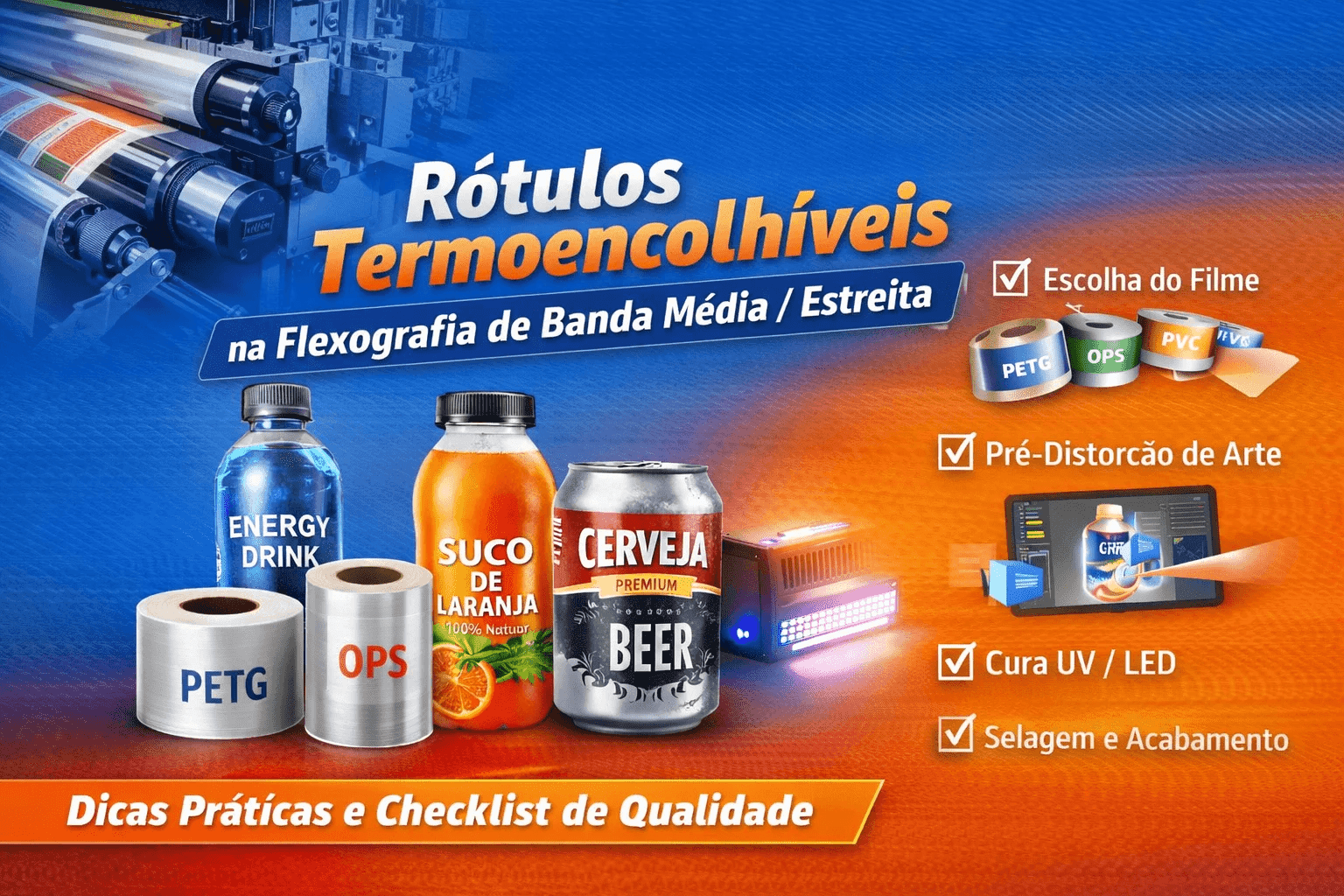
O que são rótulos termoencolhíveis (shrink sleeve) e por que eles “exigem respeito” na flexografia banda estreita
Rótulos termoencolhíveis (shrink sleeves) são mangas impressas em filme que envolvem a embalagem em 360° e, durante a aplicação com calor, encolhem para se conformar ao formato do frasco/lata. Essa característica dá um espaço de comunicação enorme e permite trabalhar com embalagens de geometrias complexas, ombros, gargalos e relevos — onde um rótulo autoadesivo normalmente teria limitação de cobertura. (bluelabelpackaging.com)
Só que a mesma vantagem (encolher e “abraçar” o frasco) traz o maior desafio técnico do sleeve: toda arte 2D vai distorcer quando virar 3D. Portanto, sleeve não é “só imprimir bonito”; é projeto de engenharia de arte + processo.
Onde a maioria erra: sleeve é um projeto (filme + taxa de encolhimento + arte + aplicação), não apenas uma impressão
O erro mais caro no termoencolhível é tratar o trabalho como se fosse um rótulo comum: aprova-se a arte “plana”, imprime-se e só depois se descobre, no túnel, que texto entortou, logos deformaram, degradês ficaram estranhos, registro “escapou”, ou que a selagem ficou evidente.
Em projetos sleeve, a sequência correta é:
- definir o filme e as curvas de encolhimento (por tipo de material e por aplicação/túnel)
- modelar a embalagem (ou ao menos mapear zonas críticas)
- pré-distorcer a arte para compensar o encolhimento e as deformações
- validar prova + validação em aplicação real (amostra em túnel)
- só então travar padrões de impressão e controle
A lógica da pré-distorção (compensar a arte para que “volte ao lugar” após encolher) é prática consolidada em soluções de pré-impressão e documentação técnica do setor. (docs.esko.com)
Materiais de sleeve: como escolher PETG, OPS, PVC (e o que isso muda na sua impressão)
A escolha do filme define: quanto encolhe, em que direção, quão sensível é à temperatura, estabilidade dimensional, comportamento na selagem e até riscos de logística (filme “encolhendo” antes da hora).
PETG
O PETG é muito usado quando o projeto exige alto encolhimento e boa aparência (claridade/brilho), e é frequentemente citado como opção forte para geometrias mais “agressivas” de frascos. (labelandnarrowweb.com)
OPS
O OPS é lembrado por boa capacidade de encolhimento e baixa variação em direção de máquina (dependendo da especificação), mas tende a exigir atenção com sensibilidade térmica e controle do processo de aplicação/armazenagem. (labelandnarrowweb.com)
PVC
O PVC ainda aparece em muitos mercados, porém, além de questões técnicas de processo, há discussões relevantes sobre impacto na cadeia de reciclagem quando aplicado em frascos PET (vale analisar cenário, requisitos do cliente e diretrizes locais). (kidv.nl)
Ponto importante (sem “marketing verde”): diretrizes e estudos de reciclabilidade variam por região e tecnologia. Há relatórios e guias que discutem como sleeves podem dificultar reciclagem de embalagens PET (especialmente por densidade, separação e tintas), mas também existem inovações(ex.: filmes e tintas “washable” e soluções floatáveis) reconhecidas em iniciativas do setor. (kidv.nl)
Pré-impressão para sleeve: a etapa que decide se seu trabalho vai virar case ou dor de cabeça
1) Pré-distorção (compensação)
Em sleeve, a arte precisa considerar que a área encolhe e se redistribui de forma não uniforme em ombros, gargalos e regiões com mudanças bruscas de diâmetro. Por isso, o fluxo típico envolve compensar a distorção na pré-impressão (pré-distorção), com concessões visuais e validações em 3D/aplicação real. (docs.esko.com)
Critérios práticos que eu uso:
- texto pequeno: evitar posicionar em zonas de alta deformação
- elementos geométricos (círculos, quadrados): cuidado extremo — denunciam distorção
- “faixas” horizontais/verticais: definem se o sleeve está “torcendo” na aplicação
- selagem: planejar para cair em área “limpa” de leitura ou trabalhar com estratégia de arte
2) Zonas críticas e “áreas proibidas”
Mesmo sem software 3D avançado, dá para mapear:
- região do ombro (mudança rápida de diâmetro)
- transição para gargalo
- base com raio pequeno
- áreas de pega (onde a mão amassa/atrito)
3) Aprovação que presta
A prova “plana” sozinha não manda. O que manda é:
- amostra aplicada em túnel real (ou condição equivalente)
- avaliação visual + critérios dimensionais (registro, legibilidade, deformação aceitável)
Impressão flexográfica banda média/estreita: o que muda no processo (e onde nasce a instabilidade)
A flexografia banda estreita é extremamente capaz para sleeve — mas sleeve cobra disciplina de setup e controle porque qualquer variação pequena vira defeito grande depois que encolhe.
Anilox, tinta e ganho de ponto: estabilidade primeiro, “cor perfeita” depois
Uma boa regra: antes de perseguir “a cor do catálogo”, garanta:
- estabilidade de densidade/força de tinta ao longo da bobina
- repetibilidade entre turnos
- controle de viscosidade/temperatura (principalmente em longos períodos)
Se a impressão oscila, o túnel “amplifica” a percepção do problema.
Cura UV/UV LED: não é só curar, é curar do jeito certo
Em filmes para sleeve, a cura precisa ser:
- suficiente para resistência (atrito, manuseio, transporte)
- sem induzir defeitos por excesso de energia (dependendo do conjunto tinta/filme)
- consistente em velocidade e largura
Registro e repetibilidade
Sleeve geralmente tem:
- selagem (seamed sleeve) ou construção específica
- serrilha/perfuração e marcações
- tolerâncias de aplicação
Isso faz o registro “funcional” (o que importa para a aplicação) ser tão importante quanto o registro “visual”.
Selagem, serrilha e acabamento: onde a conversão ganha ou perde o jogo
Em muitos projetos, o acabamento define a percepção do cliente final.
Selagem (seam)
A selagem é um ponto de risco clássico: ela pode “puxar” arte, criar sombra e denunciar desalinhamento. Em discussões técnicas do setor, distorção e seam aparecem como pontos críticos em sleeve. (labelandnarrowweb.com)
Boas práticas:
- evite texto e detalhes finos na linha de selagem
- trate selagem como “zona de segurança” no layout
- valide com amostra aplicada
Serrilha / perfuração / “easy open”
Dependendo do mercado, há exigência de facilitar remoção (inclusive por reciclagem). Alguns whitepapers e guias citam opções como perfuração vertical/“zipper” para facilitar retirada do sleeve. (resourcelabel.com)
Resistência a atrito (scuff) e manuseio
Sleeve é tocado, transportado, friccionado. Se a superfície não aguenta:
- arranha
- perde brilho
- “sujeira” gráfica aparece rápido
Checklist rápido: o que eu confirmo antes de liberar um sleeve para produção
A. Dados do cliente/embalagem
- desenho/medidas do frasco (diâmetros por altura + zona do ombro/gargalo)
- tipo de aplicação e túnel (vapor/ar, temperatura, velocidade)
- taxa de encolhimento requerida e orientação (MD/TD)
B. Filme
- PETG/OPS/PVC (e versão do fornecedor)
- janela de processo (sensibilidade térmica/logística)
- qualidade de bobinamento e estabilidade dimensional
C. Pré-impressão
- pré-distorção aplicada e revisada
- zonas críticas mapeadas e respeitadas
- selagem planejada
D. Impressão
- padrão de setup (pressões, viscosidade, velocidade)
- validação de cura e resistência
- registro funcional para acabamento/aplicação
E. Conversão/acabamento
- selagem e serrilha validadas
- tolerâncias de corte
- teste aplicado (amostra real) aprovado
Perguntas frequentes que trazem tráfego (FAQ)
Sleeve é sempre melhor que rótulo autoadesivo?
Não. Sleeve é imbatível em 360° e geometrias complexas, mas cobra projeto, validação e disciplina de processo. (bluelabelpackaging.com)
Por que minha arte “perfeita” fica torta no frasco?
Porque a arte plana distorce no encolhimento. O caminho é pré-distorção + validação aplicada. (packagingeurope.com)
PETG/OPS/PVC: qual escolher?
Depende de geometria, taxa de encolhimento, estética e requisitos do cliente (inclusive de sustentabilidade/reciclagem, quando aplicável). (labelandnarrowweb.com)
Conclusão: sleeve bom não é sorte — é método
Rótulos termoencolhíveis são uma solução poderosa porque entregam impacto visual e cobertura total, mas só performam quando a empresa trata o projeto como um sistema: filme + pré-impressão + estabilidade de impressão + acabamento + aplicação. A diferença entre “imprimir sleeve” e “dominar sleeve” está no método e na disciplina.